The Fairest of Treasures
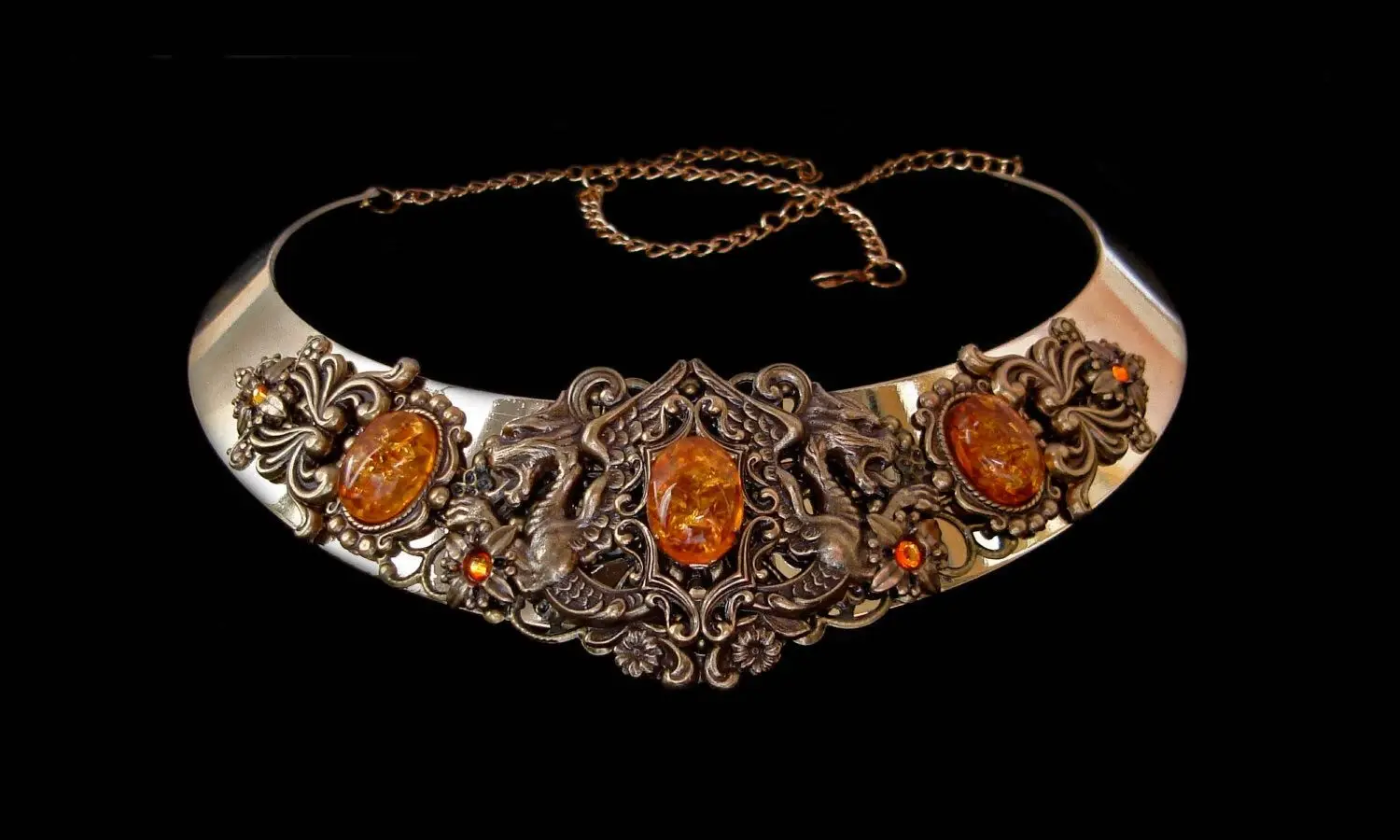
Freyja, the Vanir goddess of love and beauty, loved fine and precious things above all. One day she came upon four dwarfs, the sons of Ívaldi known as the Brísings, working gold in their underground forge. Between their hands lay a necklace so beautiful that Freyja could not bear to be without it.
The dwarfs would not sell it for gold or silver. Their price was that Freyja spend a night with each of the four in turn. Desiring the necklace more than anything, she agreed, and so Brísingamen came to rest at her throat, the most famous ornament in all the nine worlds.
But such a treasure could not stay secret. Loki carried word of the bargain to Odin, and the All Father, displeased, commanded the trickster to bring him the necklace, setting in motion a theft and a strange duel of shape-shifters.
Key Events of the Tale
The Dwarfs' Bargain
Freyja finds four dwarfs crafting Brísingamen and desires it above all else. They refuse payment in treasure, naming a very different price for the necklace.
Freyja Wins the Necklace
Freyja accepts the dwarfs' terms and gains Brísingamen. It becomes her most treasured possession and a mark of her beauty throughout the myths.
Loki's Theft
At Odin's command, Loki shrinks to the size of a fly and slips into Freyja's locked chamber. Taking the form of a flea, he makes her stir in sleep, unclasps the necklace, and steals away with it.
Heimdall Gives Chase
Heimdall, who sees and hears all, discovers the theft and pursues Loki to recover Brísingamen for its rightful owner.
Duel of the Seals
The two gods battle on a rocky islet, both taking the shape of seals. Heimdall wins the struggle and returns the necklace to Freyja.
Odin's Price for Its Return
In one telling, Odin agrees to return Brísingamen only if Freyja stirs up an unending war between two kings on earth, whose fallen warriors rise each night to fight again. This everlasting battle, the Hjaðningavíg, was said to last until the coming of a Christian hero, binding the goddess's beloved treasure to endless human conflict.
Sources and Related Tales
The fullest account comes from Sörla þáttr, a late Icelandic tale, while the skaldic poem Húsdrápa preserves the older image of Heimdall and Loki fighting over the necklace as seals.
Quick Facts
Key Participants
Freyja
The goddess whose desire for beauty wins her the necklace.
Loki
The thief who steals Brísingamen on Odin's orders.
Heimdall
The ever-watchful guardian who recovers the treasure.
About Brísingamen
The name likely means the ornament of the Brísings. It became so bound to Freyja that later poets used it as a byword for her, and it even lends its name, in altered form, to treasures in other Germanic legends.
Themes & Symbolism
Desire and Its Cost: Freyja's longing for beauty carries a price at every turn.
Craft and Value: Dwarven workmanship produces treasures the gods themselves cannot resist.
Watchman and Trickster: The rivalry of Heimdall and Loki, sealed here, runs all the way to Ragnarök.