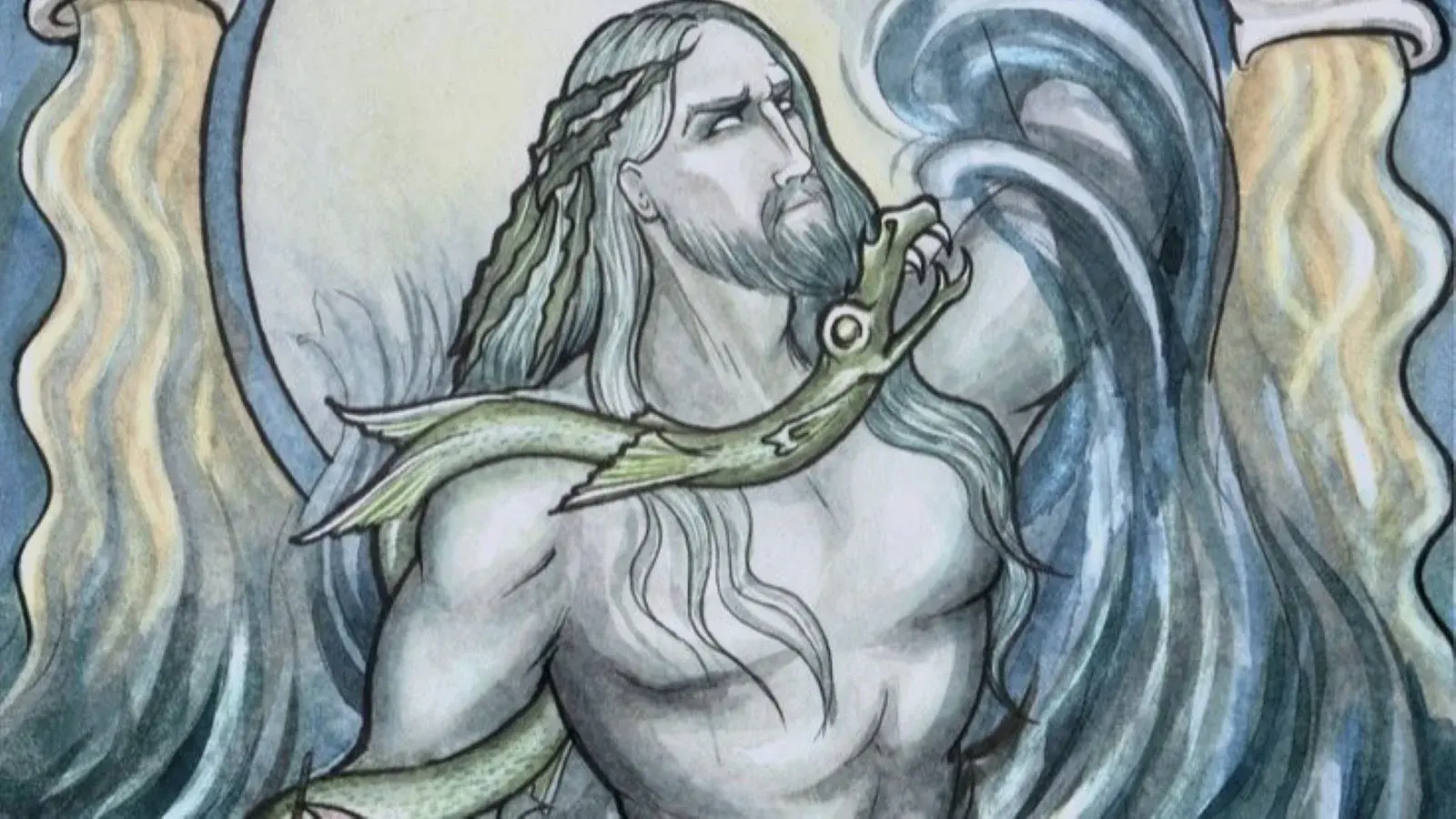
Who Is Aegir
Aegir is a powerful jötunn closely associated with the sea. Unlike many giants who oppose the gods, Aegir maintains a complicated but mostly peaceful relationship with the Aesir. He is best known as the host of lavish feasts where the gods gather to drink, boast, and argue beneath the waves.
Despite his hospitality, Aegir should not be mistaken for a gentle figure. He personifies the ocean itself: generous at times, deadly at others. Calm waters and violent storms both fall under his domain.
Sailors feared Aegir as much as they respected him. To travel the sea was to enter his realm, where fortune depended on his mood.
Character and Nature
Lord of the Sea
Aegir embodies the ocean itself, from peaceful tides to ship-destroying storms.
Divine Host
He brews endless ale in a magical cauldron and welcomes the gods to feasts in his hall beneath the sea.
Ship Breaker
Those lost at sea were said to be taken into Aegir’s keeping, making him a figure of fear as well as respect.
Aegir in Norse Myth
Aegir appears most often in stories involving feasting and the sea:
- The gods demand that Aegir host a feast and brew ale for all of them.
- Thor and Tyr obtain a massive cauldron so Aegir can brew enough ale.
- Loki insults the gods during one of Aegir’s feasts, leading to chaos and threats of violence.
- Poetic language often uses Aegir’s name as a synonym for the sea itself.
These stories present Aegir as a bridge between gods and giants, hosting peace on the surface while danger lurks beneath.
Why Aegir Matters
Aegir shows that not all giants are enemies of the gods. Some, like the sea itself, must be negotiated with rather than fought.
His dual role as host and destroyer reflects the Norse view of nature as generous but unforgiving. The same waters that feed and connect the world can also end lives without warning.
In Aegir, Norse myth captures humanity’s relationship with the sea: respect, fear, gratitude, and awe.
Quick Facts
Associated Figures
Symbolism
Aegir symbolizes the sea as both provider and destroyer. His hall of feasting represents abundance, while his reputation among sailors reflects the ever-present risk of the ocean.