Overview
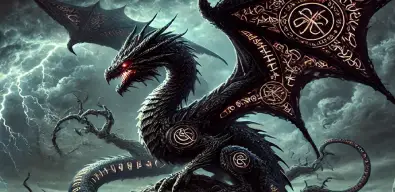
Níðhöggr (often anglicized as Nidhogg) is one of the most ominous and mysterious creatures in Norse mythology. Depicted as a massive dragon or serpent, he dwells beneath the roots of Yggdrasil, the World Tree, where he gnaws relentlessly at its foundation.
His presence symbolizes decay, corruption, and the inevitable collapse woven into the fate of all things. Yet, Níðhöggr is not merely a destroyer. He is part of the cosmic balance — a force of entropy in a universe defined by cycles of birth, death, and renewal.
He is also known to feast upon the corpses of oath-breakers, adulterers, and the wicked in Náströnd, linking him to punishment and moral consequence within the Norse afterlife.
Role & Symbolism
Destroyer of the Roots
Níðhöggr’s endless gnawing represents the constant strain placed upon the universe. His actions weaken Yggdrasil and foreshadow the great collapse that will come with Ragnarök.
Feeder on the Dead
In Náströnd, a bleak hall in Helheim, Níðhöggr consumes the corpses of those judged wicked — especially oath-breakers. This role associates him with cosmic justice and retribution.
Participant in Cosmic Conflict
Níðhöggr is frequently insulted by the eagle who sits atop Yggdrasil. Ratatoskr, the mischievous squirrel, gleefully carries messages between them, keeping their hostility alive and further stressing the Tree.
Níðhöggr at Ragnarök
After the destruction of the world, Níðhöggr appears carrying corpses in his wings. Scholars debate the meaning: is he a remnant of the old world or a dark force entering the new age?
Quick Facts
Related Stories
Habitat
Beneath Yggdrasil
Níðhöggr dwells deep at the roots of Yggdrasil, particularly near the dark and venom-filled waters surrounding Náströnd, where the worst of the dead are punished.